
In Flow With AI: What Role Will Design Play in 2026?

Alyona Morozova
Alyona MorozavaAuthor
Esther Barra
Esther BarraAuthor
Reading time
6 Minutes
Published
26. März 2026
Topics
Artificial Intelligence, UX Design, Visual Design

By 2026, generative AI is no longer a promise of the future but an operational reality. AI-supported workflows and assistance systems are productively in use as a standard in many places – whether in service, sales, operations, or HR. Companies have established governance structures, clarified responsibilities, and integrated AI as a manageable investment.

However, a significant gap is opening: some are redesigning the future of their business models, while others use AI merely as a decorative gadget. This difference will be visible to everyone by 2026, as users are no longer impressed by the mere "Wow, it talks!" effect. They don't want a show; they want reliability: it simply has to work.
No More Surface AI

Let’s be honest: we see too many "AI buttons" retrofitted to convey an impression of digital transformation. That is cosmetics, not strategy.

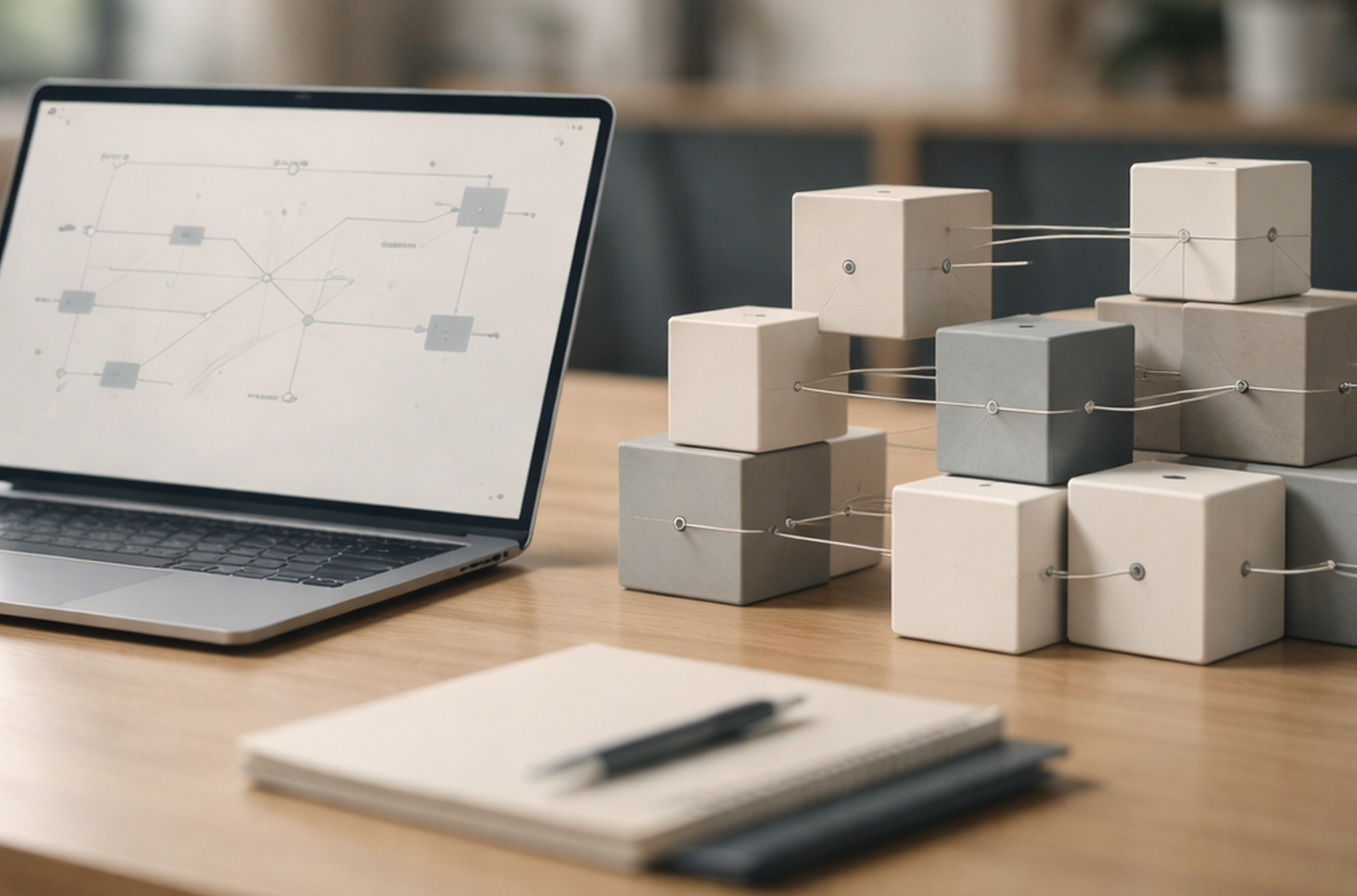
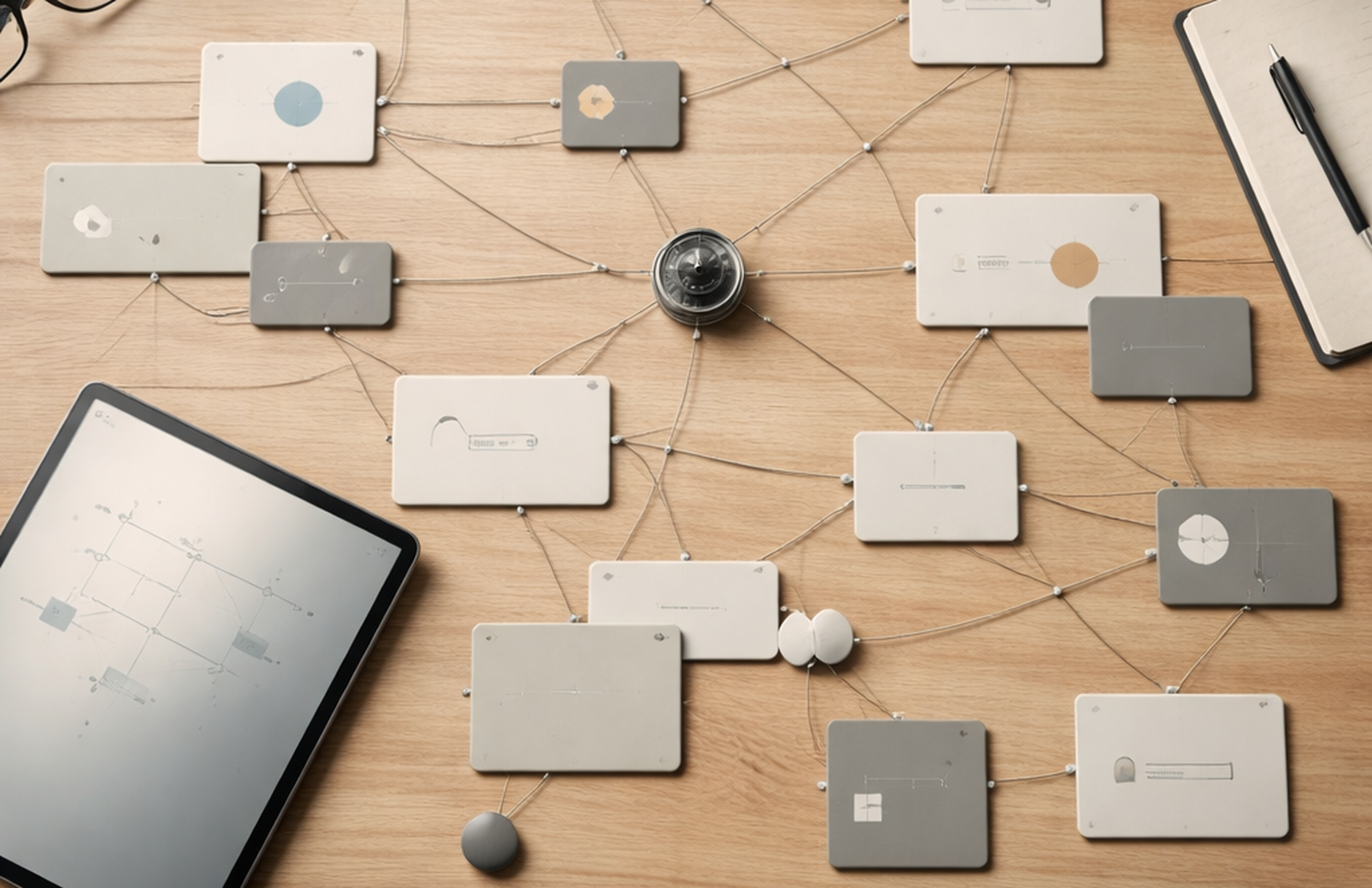
Because automation can reduce routine work, the focus is shifting from detail optimization toward scaling and systems thinking. The task of design in 2026 is to transform complexity into clarity. It's not about designing individual features or buttons, but entire ecosystems where data, AI, and humans mesh seamlessly. The question is no longer "Can we use AI here?" but "Can you translate this technology into AI in a way that gives us a real competitive advantage?"

Acceptance as an Economic Success Factor

Many companies currently fear losing ground (FOMO), which increases the risk of operating expensive, generic solutions that nobody ends up using. A generic chatbot, for example, is rarely the right solution for specific problems. As operating costs for powerful models rise, no company can afford inefficient processes.

Employees don't want long conversations with an AI to complete a simple task; they want tools that provide targeted support. This is where design becomes an economic discipline and a strategy. Instead of "hype features," tailored solutions are needed. An AI that knows your exact processes saves time and nerves. Differentiation today is no longer created by a colorful logo, but by operational superiority and optimal customer experiences.

Designing the Invisible

Design today belongs in strategy as an equal partner to tech and business. Why? Because in an AI world, the interface (the screen) is shrinking, while the complexity behind it is growing.Design no longer just shapes screens, but the invisible decisions from which the customer experience emerges:

  • How does the AI explain its decision?

  • When does the AI only support, and when does it act autonomously?

  • How does an "automatic response" feel – helpful or patronizing?

These are not purely technical questions; they are questions of trust. Design ensures that the product remains understandable, interpretable, and consistent, even when complex logic is working in the background.

Evidence Instead of PowerPoints and Assumptions

In today's enterprise world, long presentations and colorful pictures no longer count. What counts are resilient foundations for decision-making. Therefore, the role of design is changing from assumptions to verifiable evidence – risk management through clarity:

  • Navigation instead of reinvention: We scan the market permanently and know which solutions and patterns already work.

  • Validation instead of hope: We make concepts tangible as prototypes immediately and test them before they are scaled.

  • Real market tests: Testing with real users creates insights that show early on whether a business case is viable.

Revolution Not Reform

It’s not about making existing solutions just 5% more efficient. That is reform. We are in the midst of a revolution, and generative AI opens up the possibility of reimagining products from the ground up. The crucial question, therefore, is not whether we optimize an existing interface, but whether we can find a new answer to the underlying problem.

This requires designers with courage, vision, and foresight. AI provides logic and speed; design creates emotion, meaning, and experience. By 2026, seamless functionality is merely a prerequisite. To stand out from the competition, it is no longer enough. Design must deliver the "WOW" factor—not through technical gimmicks, but through a sense of magic in the user experience. A product that anticipates my needs and brings me joy is the one that wins. We must once again charge technology with delight.

Understanding Technology is No Longer Optional

Reliable AI systems only emerge through the interplay of design, technological understanding, and know-how about data flows. Those who know the capabilities and limits of models create trust instead of false promises. Our very own AI compass helps with this.

Design in 2026 means making the possible visible. Making the complex understandable. Making the important felt. In this landscape, AI is like a powerful current that teams can choose to step into. The decisive question is: Does your design harness this current and help your organization not just stay afloat, but navigate its own course?
Alyona Morozova
Alyona MorozavaUX DesignerErgosign München

Relevant Insights & News

Go to more news and insights